The 10 Most Insane Devices That Can Actually Run Doom
When id Software released the original source code for their 1993 classic in 1997, they inadvertently birthed the internet's most resilient engineering challenge. What started as a niche programming flex has evolved into a global phenomenon, answering one eternal question with increasingly absurd hardware.

📌 Key Takeaways
- The 1997 release of the game's source code sparked a decades-long hardware hacking obsession.
- Modders have successfully ported the title to everything from agricultural machinery to office supplies.
- The community remains divided on what constitutes a "true" port, fuelling the bare-metal versus shell-swap debate.
- Even biological entities (like rats) have been integrated into custom virtual reality hardware rigs.
1. The Digital Pregnancy Test
Congratulations, you are officially expecting... Nightmare mode.
In September 2020, programmer Foone Turing went viral for this project. It was a clever bit of hardware hacking. A standard digital pregnancy test uses a very basic 8-bit microcontroller and a screen that can only show fixed icons. It simply isn't powerful enough to play games.
To pull this off, Foone replaced the original internals with a tiny OLED screen and a more capable microcontroller. While the plastic shell is original, the brains inside were custom-built to handle the graphics. It perfectly highlights the modern bare-metal versus shell-swap debate, as purists argue this is essentially a miniature monitor rather than a true native port. .webp "Doom Pregnancy Test") Twitter/Foone Turing
Twitter/Foone Turing
2. A John Deere Tractor
Nothing says agricultural efficiency quite like harvesting demons while ploughing a field.
During the Def Con hacking conference in August 2022, security researcher Sick Codes demonstrated this remarkable feat. Modern farming equipment is notoriously locked down by proprietary software, preventing owners from accessing the underlying operating systems.
By bypassing the manufacturer's digital rights management, the hacker gained root access to the tractor's Linux-based display. This is a true bare-metal port, running natively on the vehicle's existing computer architecture rather than relying on swapped internals. 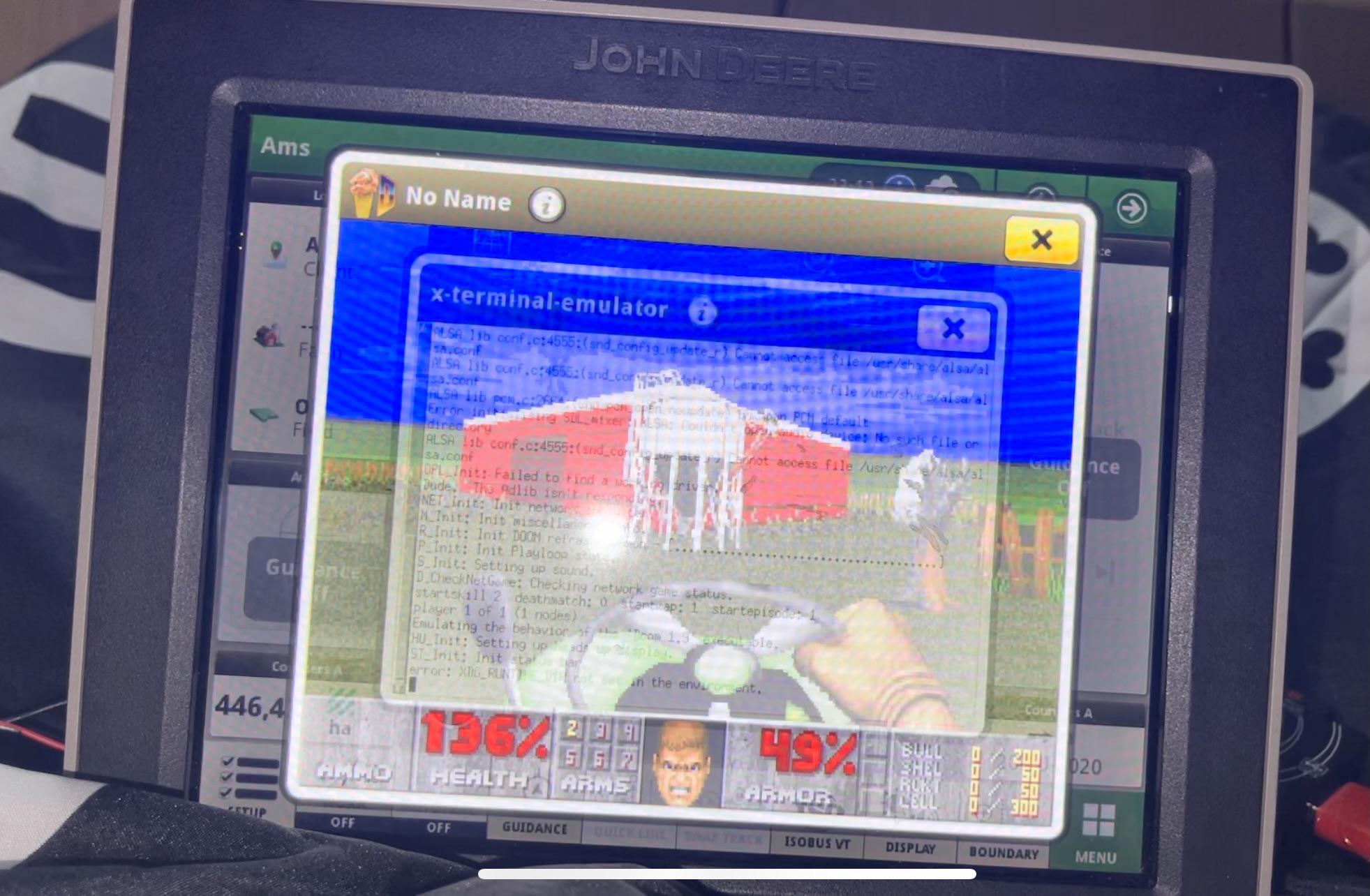 Sick Codes/Skelegant
3. Windows Notepad
Your daily text editor has a dark, pixelated secret hiding in plain sight.
In late 2022, developer Sam Chiet managed to run the game entirely within the classic Windows Notepad application. Unlike other software hacks that require heavily modified code, this project used an untouched version of the stalwart text editing programme.
The game renders at a smooth 60 frames per second using rapidly updating ASCII art. It bypasses the need for traditional graphics rendering, tricking the simple text application into becoming a fully interactive, live-updating window into hell. 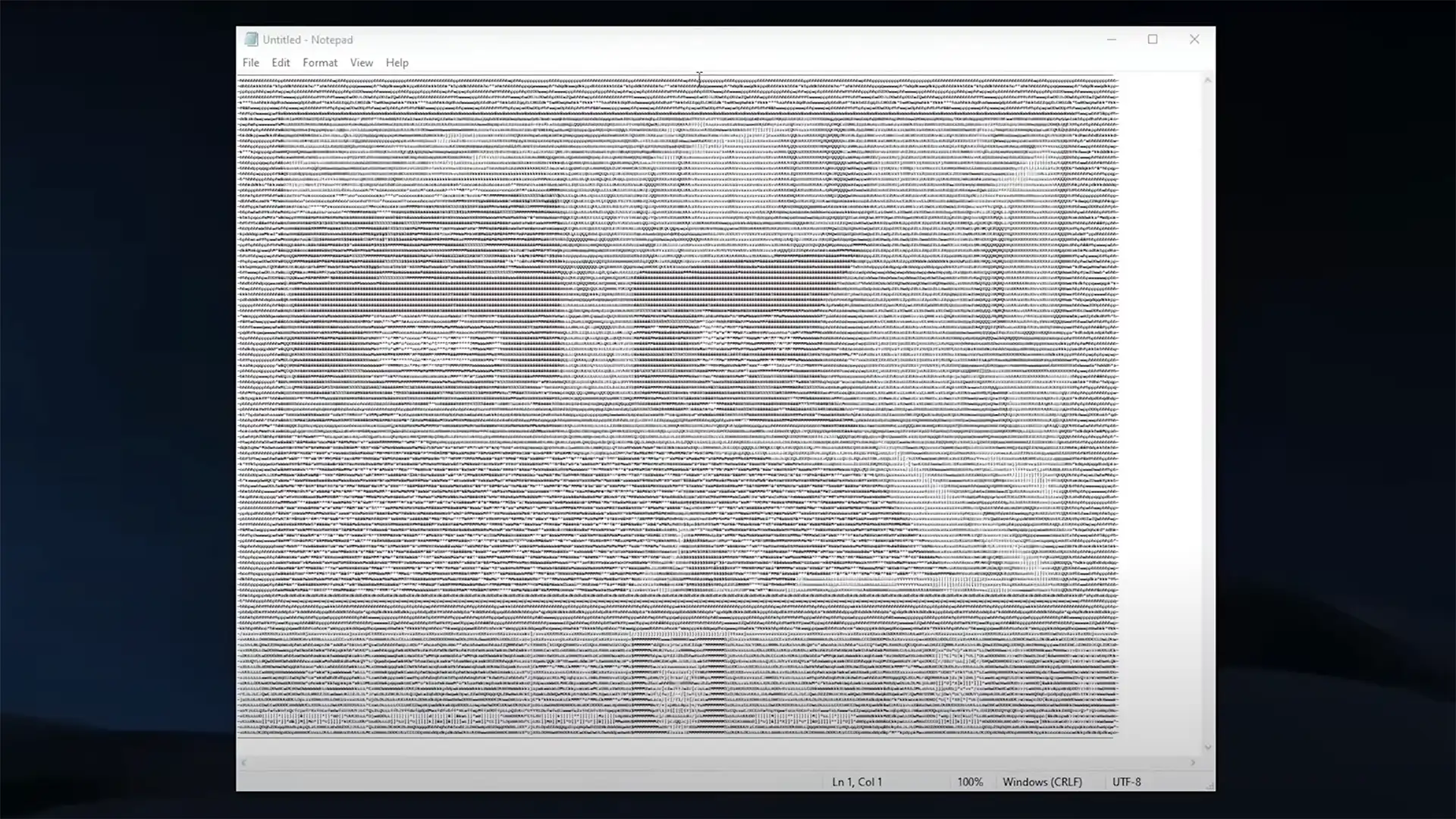 Sam Chiet
4. A Single LEGO Brick
Building a gaming computer out of plastic bricks just took on a highly literal meaning.
Hardware enthusiast James Brown designed this minuscule project, squeezing a fully playable screen into a standard blue, angled LEGO piece. The physical limitations of a classic plastic brick leave almost zero room for standard circuitry or conventional displays.
Brown engineered a custom micro-monitor that pushes out a resolution of just 72x40 pixels with 1-bit colour. While playing on a screen this tiny is a quick route to a migraine, it remains a staggering piece of micro-engineering.  YouTube - Ancient
5. A Keysight Digital Oscilloscope
Bench testing electronic signals is infinitely better when you can blast a Cacodemon between readings.
Modder Jason Gin unlocked this capability on a Keysight InfiniiVision DSOX1102G digital oscilloscope. High-end laboratory equipment often runs on standard, albeit deeply hidden, operating systems that manufacturers deliberately restrict.
Gin discovered a way to reliably crash the bespoke user interface, revealing the underlying Windows Embedded CE 6.0 desktop. From there, he simply installed the game natively, proving that a piece of testing equipment makes a very capable gaming rig. 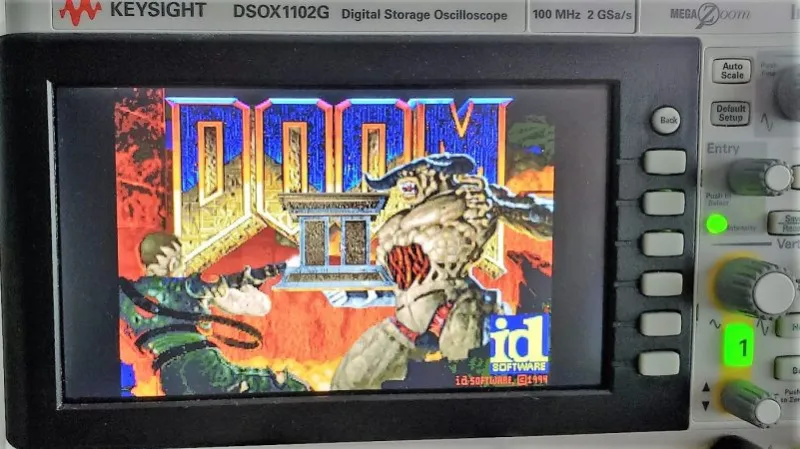 Jason Gin
6. An ATM
Withdrawing cash has never felt quite so perilous.
A team of creative hardware hackers targeted a standard cash machine back in 2014. ATMs are essentially highly secure, armoured computers, but their input methods are strictly limited to basic numeric keypads and unyielding side buttons.
By mapping the classic directional controls and firing mechanics to the PIN pad and screen-side keys, the team created a brilliant arcade cabinet. It is a fantastic example of repurposing commercial hardware to run native, complex software.  YouTube - Aussie50
7. A Potato-Powered Calculator
Maths class was boring enough before we realised the calculators were starving for potatoes.
Running classic games on a Texas Instruments TI-84 Plus is a well-documented hardware rite of passage. The real hurdle is not the software processing, but rather providing a sustainable, entirely off-grid power source.
YouTuber Equalo solved this by wiring up hundreds of rotting potatoes to generate a sufficient electrical current. It is a foul-smelling, highly organic solution that proves even root vegetables can power a 1993 software masterpiece.  YouTube - Equalo
8. A 1980s Teletext TV
Broadcasting demons straight into your living room using the magic of retro television signals.
A programmer known online as lukneu targeted an ancient television set, specifically using its inbuilt Teletext decoder. Retro televisions lack any kind of modern processing power or digital inputs, making them completely incompatible with traditional rendering.
To bypass this, a Linux machine runs the actual game while a Raspberry Pi encodes the visual output into a composite video Teletext stream. It is a brilliant workaround that pipes the action directly onto the cathode-ray tube screen. 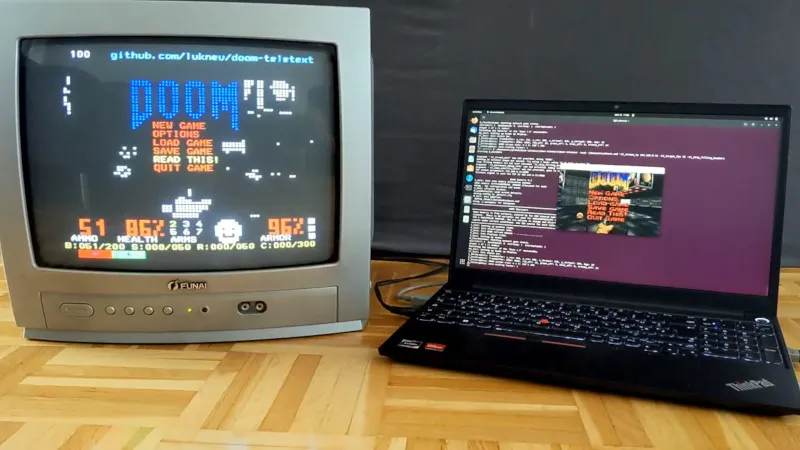 YouTube - lukneu
9. A Rat-Operated VR Rig
Biological science meets classic gaming in a project that feels ripped from a dystopian novel.
Researcher Viktor Toth constructed a custom virtual reality setup designed entirely for a rat. Animal testing usually relies on mundane mazes, which can be difficult and expensive to scale for complex cognitive research.
Toth placed the rodent on a spherical treadmill and linked its physical movements to the in-game character. The rat navigates the virtual corridors and is rewarded with sugar water from a solenoid dispenser for successful behaviour. 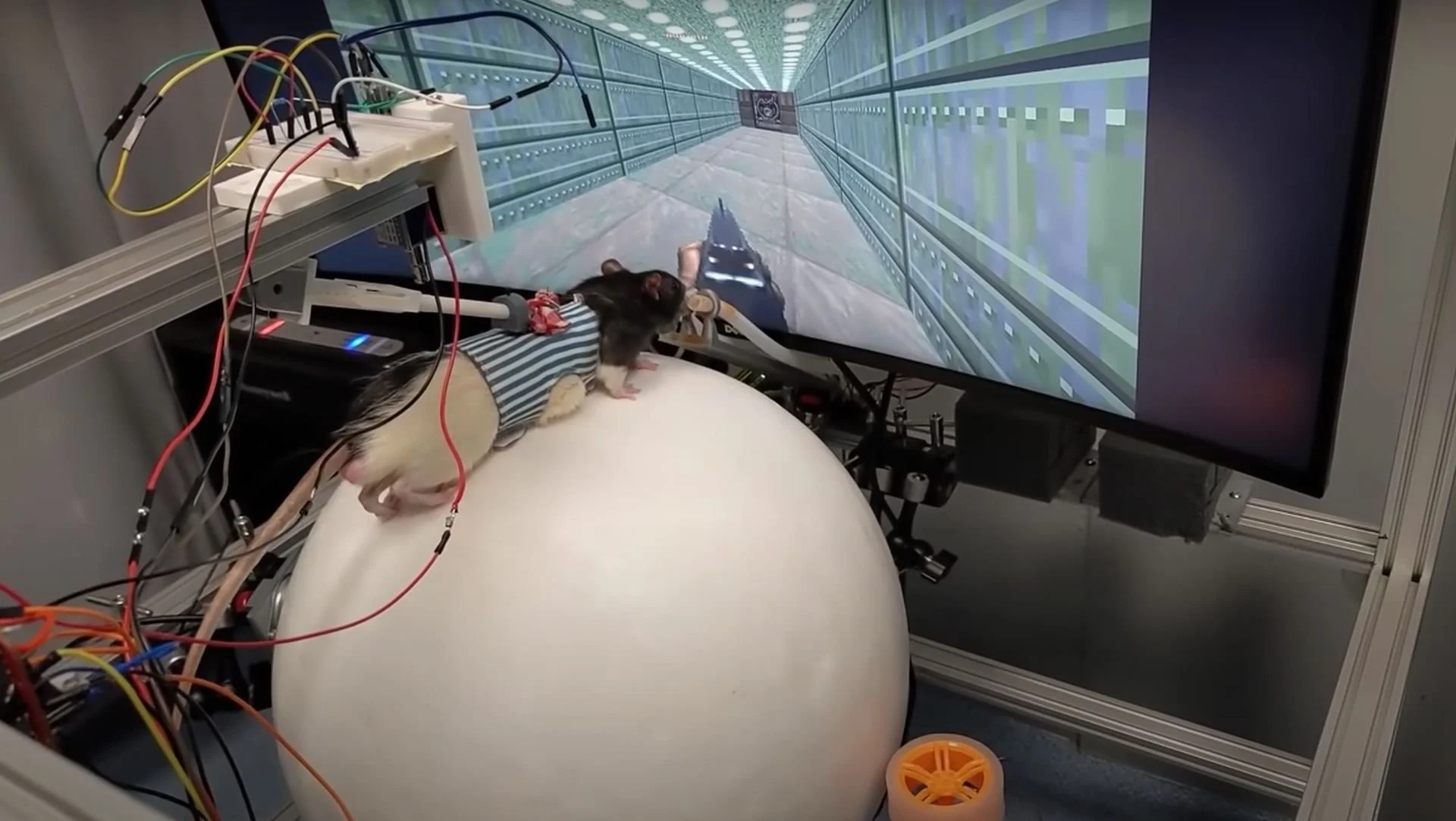 Viktor Toth
10. A Digital Camera
Capturing memories takes a back seat when there is a pixelated shotgun in your hands.
Resourceful modders targeted a vintage digital camera to see if its primitive screen could handle the action. Early digital cameras feature painfully sluggish liquid crystal displays and incredibly restrictive menu-navigation buttons.
Despite the choppy frame rates, the hackers successfully loaded the game into the camera's memory. Players must endure severe visual ghosting and awkward controls, proving that just because you can port a game, it does not mean you should.  YouTube - LGR
⚡ NerdZap's Take
We have reached a fascinating point in hardware hacking where the limitations are no longer technological, but purely imaginative. While the shell-swap projects are visually hilarious, the true engineering marvels lie in the bare-metal jailbreaks. Seeing someone bypass proprietary tractor software to run a thirty-year-old game is not just a great meme; it is a vital exercise in consumer ownership and the right to repair. Keep gutting your gadgets, nerds.













About the Author: Chief Nerd
With over 15 years in IT and Cyber Security, I specialise in making tech accessible. NerdZap grew from a YouTube channel into a dedicated site for hardware reviews, guides, and tech news. I aim to share my industry experience while balancing life as a busy dad.