"Delete This" - NVIDIA’s DLSS 5 is a Black Mirror Fever Dream, and Gamers Hate It
NVIDIA’s trajectory over the last decade reads like a classic comic book supervillain origin story. First, they were the undisputed champions of gaming, delivering the horsepower needed for incredible virtual worlds. Then, they became the darling of Wall Street as their stock skyrocketed. Shortly after, they seemingly pivoted away from everyday consumers to chase the lucrative enterprise AI gold rush. Now, they have returned to the gaming sphere with DLSS 5, a neural rendering technology that feels straight out of a Black Mirror episode. It is undeniably a technical marvel, but the community reaction suggests gamers are well and truly fed up.
📌 Key Takeaways
- NVIDIA has officially unveiled DLSS 5, a real-time neural rendering model designed to infuse games with photorealistic lighting and materials.
- CEO Jensen Huang has labelled the technology as the "GPT moment for graphics," claiming it blends generative AI with traditional rendering techniques.
- The announcement has been met with severe backlash on social media, with frustrated users telling NVIDIA to "DELETE THIS".
- Gamers are loudly blaming NVIDIA's aggressive AI push for spiralling PC building costs, joking that RAM now costs thousands.
A "GPT Moment" for Graphics
Reports from NVIDIA's latest announcement detail a massive shift in how our games will be rendered. Moving away from simply upscaling resolution or generating frames, DLSS 5 takes a game’s colour and motion vectors to generate entirely new, photorealistic lighting and materials in real time at up to 4K resolution.
CEO Jensen Huang did not mince his words, stating, "Twenty-five years after NVIDIA invented the programmable shader, we are reinventing computer graphics once again." He added that DLSS 5 is the "GPT moment for graphics", blending hand-crafted rendering with generative AI to deliver a dramatic leap in visual realism while preserving the control artists need for creative expression.
This builds upon the foundation of DLSS 4.5, which was already using AI to draw 23 out of every 24 pixels seen on the screen. Now, the AI model has been trained to understand complex elements like translucent skin, fabric sheen, and environmental lighting conditions from a single frame. Major titles like Starfield , Resident Evil , and Hogwarts Legacy are already slated to support the technology this autumn.


The Community Backlash: "AI Slop Filter"
Despite the sheer technical impressiveness of the announcement, the reception has been intensely hostile. Gamers are suffering from profound AI fatigue, and seeing their favourite hobby turned into what many perceive as a generative AI playground has sparked outrage.
Announcing NVIDIA DLSS 5, an AI-powered breakthrough in visual fidelity for games, coming this fall.
— NVIDIA GeForce (@NVIDIAGeForce) March 16, 2026
DLSS 5 infuses pixels with photorealistic lighting and materials, bridging the gap between rendering and reality.
Learn More → https://t.co/yHON3nGyxE pic.twitter.com/UvF9G7tlZs
Social media platforms have been flooded with negative reactions. Rather than praising the visual fidelity, users are actively rejecting the premise. One prominent reaction simply read, "RESTRAINING ORDER" and "DELETE THIS SON". Furthermore, the community is explicitly linking this AI arms race to the exorbitant cost of modern PC gaming. Another viral comment captured the sentiment perfectly, exaggerating that "2 sticks of RAM cost 5000 because of this sh*t".


While the technology is objectively powerful, the overarching feeling is that NVIDIA has lost touch with the everyday consumer who just wants to play games without needing a supercomputer.
The RTX 50-Series Paywall Fears
Adding fuel to the fire is the looming threat of a hardware lockout. The press release proudly notes NVIDIA's progression to path tracing and neural shaders with the GeForce RTX 5090 in 2025. This heavy emphasis on the 50-series architecture strongly implies that gamers running 40-series cards (or older) will be entirely locked out of DLSS 5.
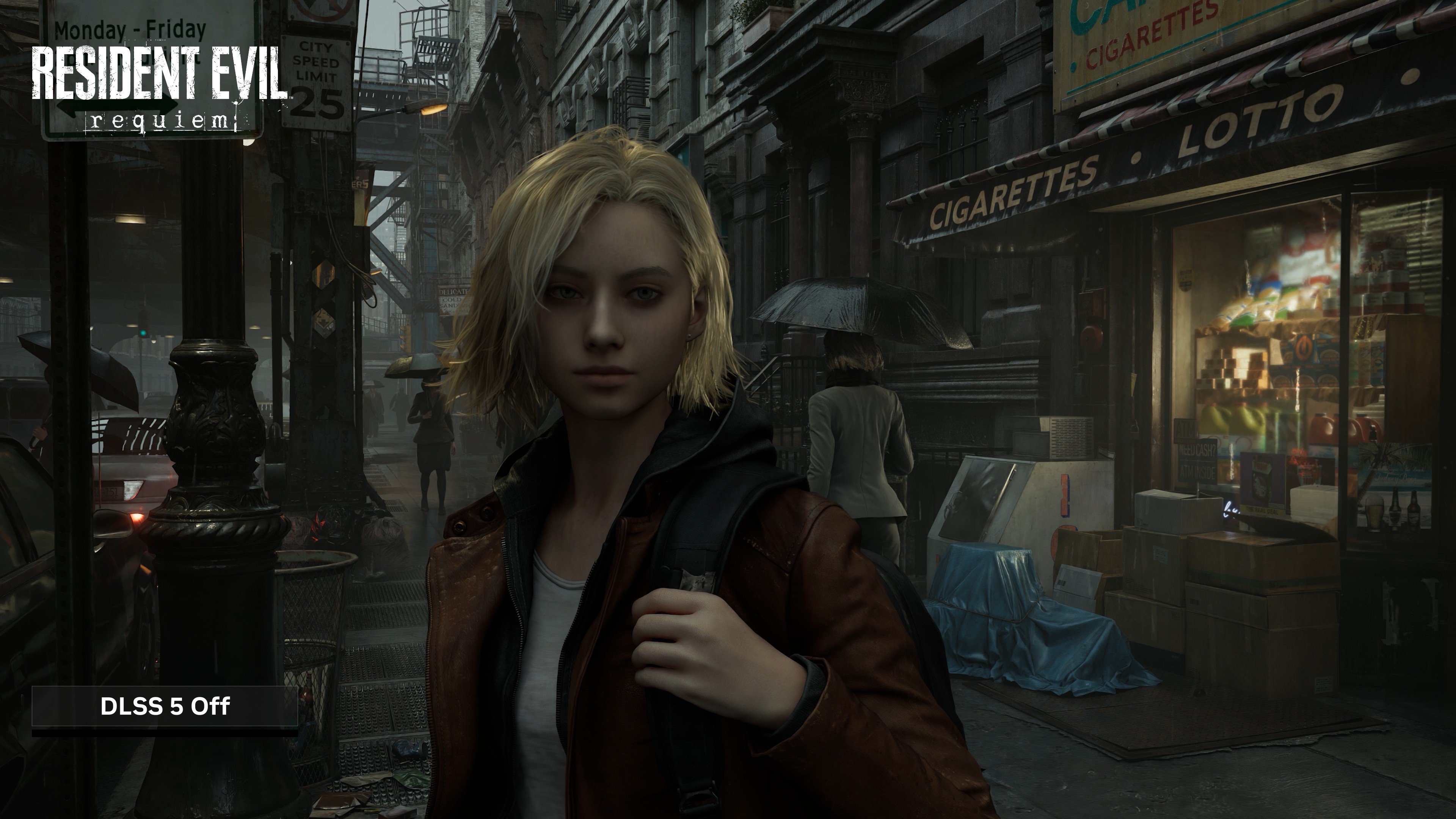

Currently, the exact entry price to access DLSS 5 via a hardware upgrade remains unconfirmed. However, if this technology is strictly gated behind NVIDIA's most premium, existing GPUs, it will only cement the community's view that the organisation is prioritising high-margin AI features over accessible gaming hardware.
You can view the full technical breakdown and interactive comparison sliders on the official NVIDIA GeForce announcement.
⚡ NerdZap's Take
I have been building rigs and covering PC hardware for years, and I can objectively say the sheer computational power required to make DLSS 5 work is a monumental leap in computer science. The ability to probabilistically generate subsurface skin scattering in real-time is nothing short of brilliant. However, I completely understand and validate the deep frustration coming from the gaming community. Gamers supported NVIDIA for decades, only to watch the company pivot into an AI titan that now seemingly views traditional rendering as an afterthought. Forcing expensive, AI-heavy tech onto a consumer base that is already crying out over the cost of living and inflated PC part prices feels incredibly tone-deaf. DLSS 5 might be the future of graphics, but NVIDIA needs to remember who helped build their empire in the first place, or they risk cementing their supervillain status for good.












About the Author: Chief Nerd
With over 15 years in IT and Cyber Security, I specialise in making tech accessible. NerdZap grew from a YouTube channel into a dedicated site for hardware reviews, guides, and tech news. I aim to share my industry experience while balancing life as a busy dad.